


Willys Overland Company
About Willys Overland
Willys Overland Company
History (1908–1963)
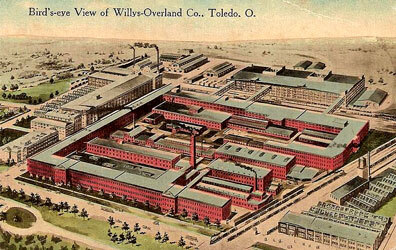
The history of the Willys "Jeep" can be traced back to the origins of its first parent, the Willys-Overland Motor Company. Willys-Overland would eventually produce a lineup of models including the Universal CJ-2A, CJ-3A, CJ-3B, CJ-5 and CJ-6, 2 and 4WD Pickup Trucks, Station Wagons, and post-war military models (M38 and M38A1), among other vintage Jeep models.
Traced back to the purchase of the Overland Automotive Division of the Standard Wheel Company in 1908 by John North Willys, this young and initially struggling company was renamed the "Willys-Overland Motor Company" in 1912.
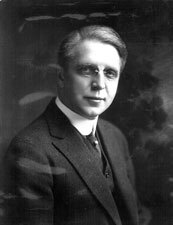
Willys-Overland's financial difficulties and employee safety risks challenged the company until the late 1930s, when several changes occurred. In 1937, WO Motors introduced a redesigned 4-cylinder engine paired with a more streamlined body, one-piece rounded hood, and fender-embedded headlamps. Shortly after, Joseph Frazer joined Willys from Chrysler as chief executive. Under Frazer's leadership, the company began to focus efforts on strengthening the 4-cylinder engine for more rigorous use.
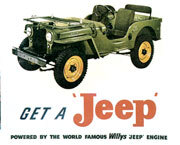
In 1940, these preparations proved invaluable, and Willys-Overland was included in the bidding for the development of a new, lightweight, four-wheel-drive, general-purpose (GP) US Army vehicle. The US Army, in the midst of WWII, was in desperate need of a transport vehicle that was easy to repair in the field. The first design chosen by the Army Ordnance Technical Committee was the "Blitz Buggy" submitted by the Bantam Car Company. However, it was determined that the Bantam Car Company was too financially unstable to satisfy production demands, and so Willys-Overland and Ford were chosen to produce their own pilot models for testing. Willys-Overland eventually won the government contract for the "MA" largely due to its superior engine, low bid, and the company's ability to fulfill production needs. The model was later renamed the Willys MB. Willys-Overland produced over 300,000 Jeeps for military use during WWII.
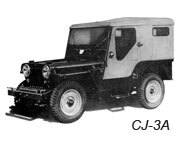
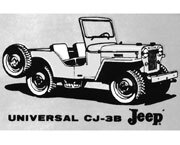
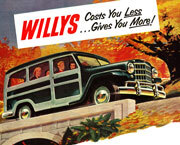
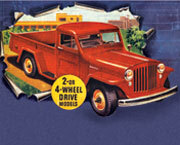
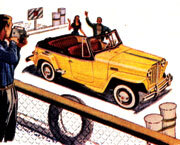
Following WWII, Willys-Overland faced the challenge of entering a new civilian market. Opting not to resume production of its pre-war passenger car models, the company decided to focus first on producing a civilian version of the successful wartime MB "Jeep". The first model introduced into the civilian market was the CJ-2A, a stripped-down version of the MB with the addition of a tailgate, which gained popularity in farming, ranching, hunting, and other industrial applications. In the years following, Willys-Overland continued to diversify its lineup with 2 and 4WD Station Wagons and Trucks, the Jeepster, M38, M38A1, CJ-3A, CJ-3B, CJ-5, and CJ-6, among others.
In 1953, Kaiser Motors purchased Willys-Overland and changed the name to Willys Motor Company. As production facilities expanded, sales of Willys and Kaiser models continued to slowly decline, foretelling the disappearance of the Willys name in 1963, when the company became known as the Kaiser-Jeep Corporation.
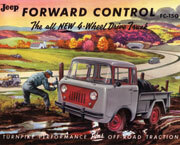
Jeep models produced by Willys-Overland: Willys MA, Willys MB, Universal CJ Series (CJ-2A, CJ-3A, CJ-3B, CJ-5, CJ-6), Willys Wagon (Utility Wagon, Sedan Delivery, etc.), Willys Pickup Models, Willys FC-150 and FC-170, Willys Jeepster (VJ), Willys M38, Willys M38A1
(See About Willys Jeeps for more history on vehicles produced by Willys-Overland.)
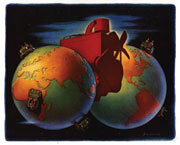
Willys-Overland Photos
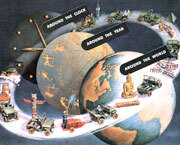
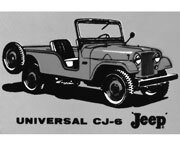
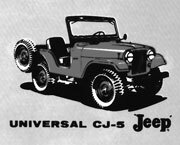
For photos of customer Willys Jeep restorations, visit our Willys Jeep Blog Customer Photo Album!
Visit the Kaiser Willys Auto Supply Homepage for Axle Parts, Body Parts, Electrical Parts, Interior Parts, Transmission Parts, and much more!
Willys Overland Paint Colors
See All — Paint Colors Offered by Willys-Overland from 1946–1963


